
Rat Pricing Inquiry Survey - Results

After having the opportunity to not only live in two different countries with rats, but also travel across Europe with them, I have realised that rat care prices vary wildly from place to place. While this is something that has been regularly talked about in the rat community, it has been purely anecdotal and never backed by any actual data.
Survey Overview
A total of 65 participants answered an anonymous survey that comprised of the following questions:
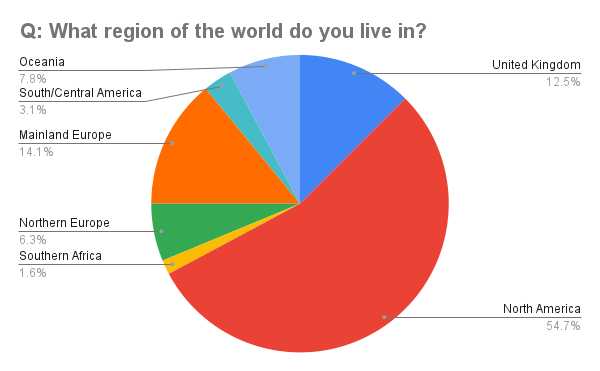
What region of the world do you live in?
What is your currency?
What is the average price you pay for rat food, per kilogram?
What is the average price you pay for a veterinary consultation appointment?
If you have experienced a veterinary emergency, what was the average price you had to pay for this appointment and treatment?
Data was collected and reported prices were converted into USD ($) for the sake of comparison. Mean (average) and medians were calculated for each currency. A total of 65 rat owners responded to the survey, with the primary regions being covered as Mainland Europe (14.4%), United Kingdom (12.5%) and North America (54.7%). The greatest currency reported was the United States Dollar (USD) which accounted for 48.4% of all responses.

Key Findings
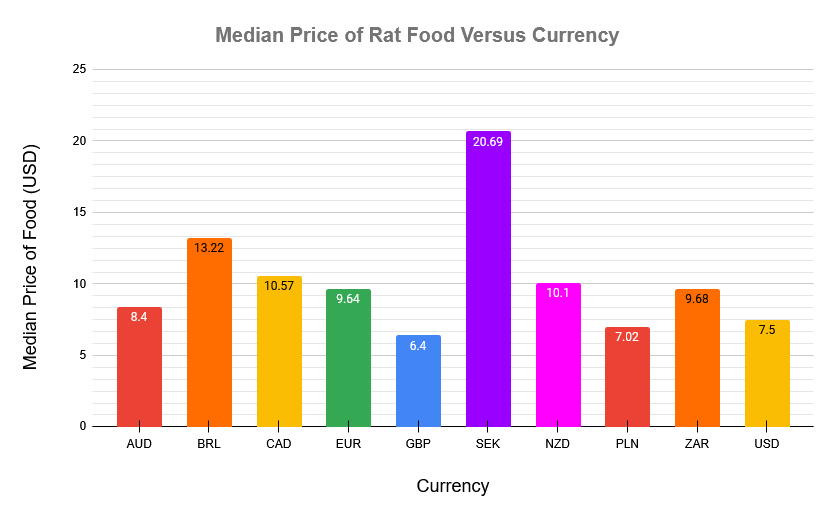
The median price of rat food varied wildly, from as little as $6.40 per kilo in the UK, to nearly $20.69 per kilo in Sweden and Norway. The median price of a standard veterinary visit ranged from $30.84 in Brazil, to $119.29 in Canada. Both of these findings support the notion that the costs of owning rats varies wildly from place-to-place.

It was also found that more than 75% of participants have experienced a veterinary emergency while owning rats (76.6%). With slightly more than 3 in 4 rat owners having emergencies with their rats, it is exceptionally important to ensure that emergency funds are always available to cover the unexpected veterinary costs. Median costs ranged from $119.82 in Brazil, to an average of $350.00 in the United States.


Final Thoughts
All things considered, this was a really interesting piece of preliminary work. It has helped me gain a better understanding of the costs experienced by pet owners globally. Going forward, I aim to gain a clearer picture of true costs.
Future improvements of the survey could include:
Expand survey availability through social media and veterinary offices
Focus on costs by a country-by-country basis to account for the variability of pricing
Aim to collect a higher number of survey results, and run the survey for longer than a week’s time
Specify the types of emergencies brought to the veterinary office, as a surgery will inevitably cost more than just being sent home with basic antibiotics
Make a distinction on the costs of appointments versus treatment in veterinary settings
Run 95% confidence intervals for results
Include more data points from underrepresented regions, such as South/Central America, Asia, and Africa


Comments