
Beat the Heat – Rat Edition

This summer has been pretty mild compared to what I'm used to back home, but over the last week the temperatures here in the UK have been sweltering. It definitely doesn't help that I live on the seventh floor of my apartment building, where my flat gets direct sunlight from almost every direction.
When I came home from work one afternoon, I found one of my boys, Stapler, draped over the side of the hammock trying to cool himself down.
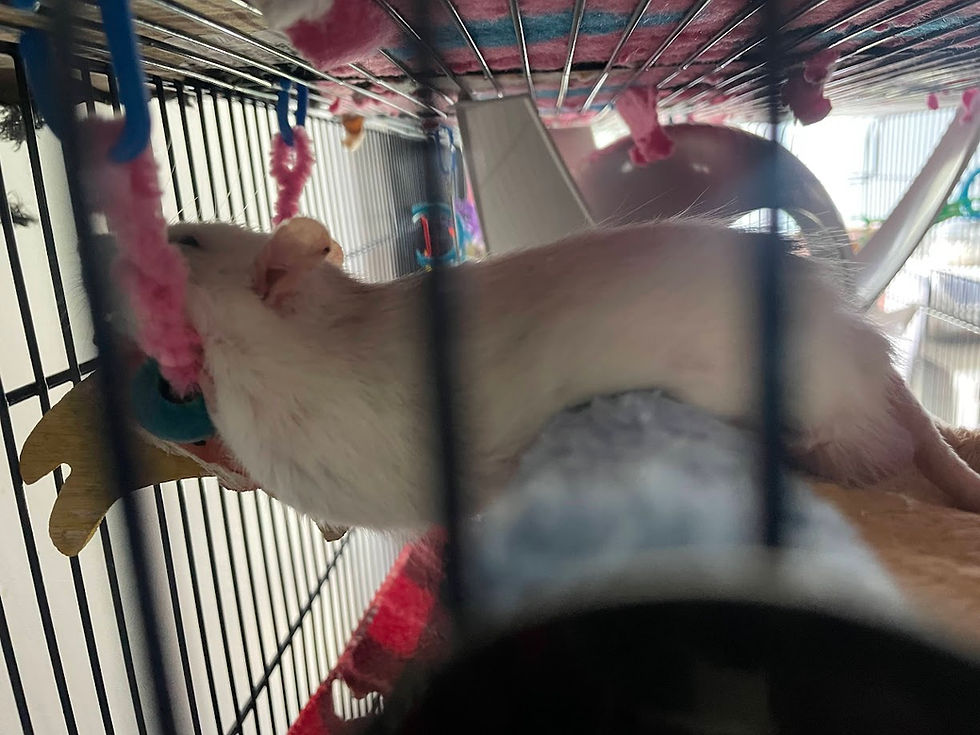
The room felt a little stuffy, but it didn't seem particularly hot to me. Rats, however, are much more sensitive to heat than we are, so I ended up ordering a temperature and humidity gauge to make sure I could keep the boys comfortable throughout the summer.
Signs your rat is a little too warm
“Melting” or “Pancaking” to increase surface area
Rats cannot sweat, so this is their way of cooling!
Bright pink ears
In intact males, the scrotum may also appear bright pink and droopy
Reduced activity
Rats do best at temperatures between 18°C and 25°C (64°F to 77°F) with a humidity level of 30-70%. Once temperatures start creeping toward the upper end of this range and beyond, they become increasingly at risk of heat exhaustion.
Because rats have a limited ability to regulate their body temperature, heat exhaustion can develop surprisingly quickly. If it isn't addressed promptly, it can progress to heat stroke, which is a life-threatening emergency requiring immediate veterinary care. The good news is that, when caught early, heat exhaustion can often be resolved by gradually cooling the rat back to a normal body temperature over approximately 15-30 minutes.
Signs of Heat Exhaustion in Rats
Excessive drinking
Weakness/lethargy
Increase in heart rate
Rapid breathing
Reduced appetite
Ears, tail, and paws that feel unusually warm
Heat Stroke
If you suspect your rat is suffering from heat stroke, seek veterinary care immediately. While arranging transport, begin gently cooling them.
Symptoms of Heat Stroke
Drooling
Unresponsive or minimally responsive
Open-mouth breathing
Bright red gums or tongue
Staggering or uncoordinated movements
Heat stroke is a medical emergency. Your rat will need veterinary treatment to replace lost fluids, stabilise their body temperature, and monitor for complications.
DO
Call your veterinarian immediately.
Gradually lower your rat's body temperature by applying lukewarm (not cold) water to their fur. Place a wrapped ice pack against the neck or beside the body, and use a fan to encourage evaporative cooling if possible.
Encourage them to drink by offering water, diluted juice, or an electrolyte solution if they are willing.
DON'T
Do not submerge your rat in cold water, as this can send their body into shock.
Do not force them to drink.
Tips for Keeping Your Rats Cool
Here are some simple ways to help your ratties stay comfortable during hot weather.
Keep the cage out of direct sunlight
Close curtains or blinds during the hottest part of the day, especially if the room receives prolonged sun.
Move the cage to the coolest room available
If one room becomes too warm, temporarily relocate the cage to a cooler part of the house, such as a tiled bathroom or another naturally cooler room.
Provide plenty of fresh water
Offer multiple water sources and replace them regularly throughout the day. I keep two water bottles and a water bowl in my cage, and on particularly hot days I'll refresh them several times to keep the water cool and inviting.
Offer water-rich treats
Foods like cucumber and watermelon can provide extra hydration while making a refreshing snack.
Keep the air moving
A fan can help circulate air around the room, but avoid pointing it directly at the cage. If it's cooler outside than indoors, opening the windows to create a breeze can also help.
Provide cool surfaces
Place a ceramic tile inside the cage for your rats to lie on. I sometimes keep a spare tile in the fridge so I can swap it out once the first one has warmed up.
Pea Fishing
Many rats aren't enthusiastic swimmers, but they're often more than happy to wade into a shallow dish of water to retrieve frozen peas. Other vegetables work too, but peas are ideal because they're small and easy to grab.

Archie having a dip in the pool for some frozen corn Make a "Ratty A/C"
This is one of my favourite ways to keep the cage cool, even if your home doesn't have air conditioning. I place frozen reusable ice packs (or frozen water bottles if that's what I have available) on top of the cage with a ceramic bowl or hide underneath. The cool air sinks into the cage, creating a much more comfortable resting spot. I use a ceramic bowl instead of a plastic hide because it stays cooler for longer.
Keep several ice packs or bottles in rotation so you always have frozen replacements ready. I find each set usually lasts about half a day, depending on how hot it is.

If Your Home Just Won't Cool Down...
Sometimes, despite your best efforts, your home simply isn't cool enough to keep your rats safe. This is especially true during a heatwave or if you don't have air conditioning.
In these situations, don't be afraid to temporarily bring your rats somewhere cooler in a secure carrier. Spending the day somewhere air-conditioned, such as a shopping centre, café, library, workplace, or the home of a friend or family member, is far safer than leaving them in dangerously high temperatures.
A day spent relaxing in a travel carrier is much less stressful than suffering from heat exhaustion or heat stroke. As long as they're secure, and have access to water, a temporary outing can be an excellent backup plan when other cooling methods aren't enough.

Summer can be challenging, but with a little planning it's entirely possible to keep your rats comfortable and safe. Monitor the temperature, watch for the early signs of overheating, and don't hesitate to get creative if your home becomes too warm. When in doubt, it's always better to cool your rats down sooner rather than later.

Comments